Galvor is a creative marketing intelligence platform for direct-to-consumer performance teams

Decode.

50+ attributes, tagged per ad.
Hook, cast, pacing, CTA.

A short silent loop: an American creator holds the product up to camera in a warm indoor room.
HookDirect to camera
ProductVisible, in hand
SettingIndoor, warm
CastEveryday creator
PacingFirst cut at 1.2s
CTASpoken, at 0:26

Prove.

Why the ad worked.
And why it didn’t.

Winner · $18 CAC
  • PresenterDermatologist
  • HookNames the problem first
  • ProductIn hand from 0:01
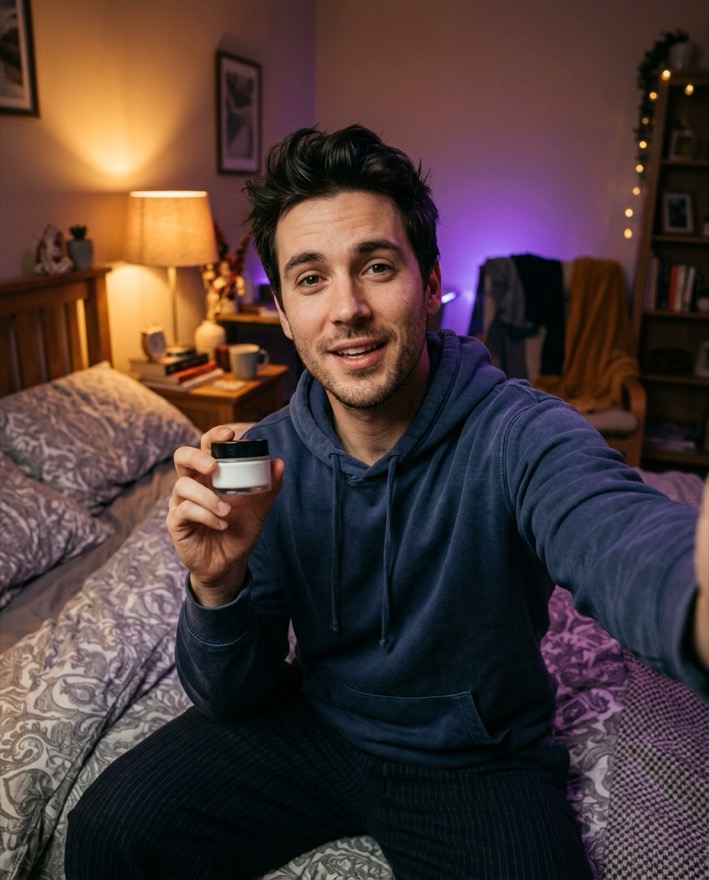
The losing ad for the same serum: an everyday user holds the bottle up in a dim, cluttered bedroom $31 CAC

CAC (Customer Acquisition Cost)

Dermatologist$18

Daily user$31

Create.

Builds the next ad
from the winning formula.

Raw ads in

Everything the account has ever run

Brand memory

  • Problem-statement open
  • Product in hand, first 3s
  • Everyday creator, not talent
  • Routine, shot at home
  • CTA spoken, not supered

Daily Glow · 411 ads remembered

Built by Vira

  1. Cut 070:31

  2. Cut 090:24

Run.

Decoded, scripted, shipped — every two weeks.
Your brand. Our desk.

Cycle 14 · live Sep 8 — Sep 22
  1. 01 Decode 31 ads, frame by frame
  2. 02 Prove every attribute priced
  3. 03 Create 9 cuts made
  4. 04 Shipped −18% CPO

Galvor runs the loop — your team keeps the brand and the final yes. Every 14 days. Nothing shipped without a reason.

Scroll
01 / 04

Trusted by leading D2C brands

  • XTEND
  • C4 Original
  • Pure Nutrition
  • PW
  • halo care
  • Blue Nectar
  • MaisonX
  • GMR
  • AngelOne
  • Palladium

Why now

Media got optimized to the decimal. The content running through it didn’t.

Advantage+ and Performance Max took the media decisions off your desk. Bidding, placement, audience — the machine does it. Creative is the last lever you still control, and it’s the one nobody has data on.

Decode

Your creative and your competitors’, decoded.

0 ads decoded

Top three hooks

  1. Problem-statement, face to camera7 of your 9 strongest
  2. “Ever read the label?” opener1.6× the hold of an average open
  3. Direct question to the viewerCost per order down 22%

Top three narratives

  1. Before / after in the first 3 seconds6 of theirs. None of yours.
  2. Routine, shot at home1.4× the hold of studio sets
  3. Founder-led explainer9 of theirs. None of yours.

Top three creator types

  1. Explainer, own wordsUnscripted beat scripted
  2. Routine creator, filmed at homeBeat studio-lit sets by 1.4×
  3. Comment-answer creatorOpens on a question they were asked

One loop. It gets sharper every campaign.

Module 01

Actions

Where to put the next dollar. And where to stop.

  • Scale
  • Cut
  • Shift
ActionsLive

Ordered by money at stake · 32 of 11

  1. ScaleProblem-statement

    Put more budget behind problem-statement opens. 18% cheaper per order than your average, on 91 creatives.

    $184Kif you scale it

  2. CutProduct late in frame

    Pull budget out of cuts that hold the product back past 10s. 46% dearer than your average, on 38.

    $112Kfreed if you cut

  3. ShiftStudio → at home

    Move budget from studio-lit sets into routines shot at home. Same creators, 1.4× the hold.

    $94Kmoved, not added

Module 02

Scripts

Not concepts. Timecoded scripts your creators can shoot tomorrow.

  • Hook
  • Body
  • CTA
  • Timing
  • Brand rules
ScriptsLive

Built from what held · 21 of 4

Creator to camera, at home

Dull by lunch

  1. 0:00Hook“Dull by two every day? I stopped that.”
  2. 0:06BodyTwo drops at eight, to camera, one take
  3. 0:24Proof“It is five now. Same face.”
  4. 0:31CTA“Find your routine. Link in bio.”

Problem-statement hook · held in 7 of your 9 strongest

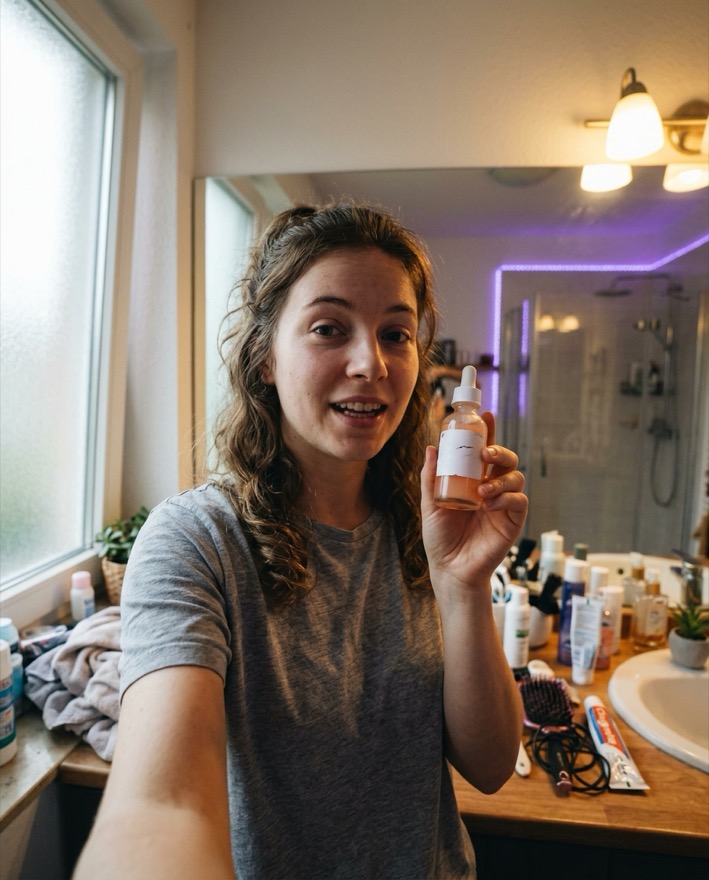
Creator holding the serum in her bathroom

Read the label

  1. 0:00Hook“Ever read what’s in a serum? I did.”
  2. 0:07BodyLabel to camera, her own words, unhurried
  3. 0:20Proof“Put it on at eight. It is three. Nothing added.”
  4. 0:28CTA“Find your routine.”

Routine shot at home · 1.4× the hold of studio sets

Module 03

Generate

Finished ads, not mood boards. On brand, ready to ship.

  • Image
  • GIF
  • Video
  • Adaptive
  • Brand theme
  • High-res
GenerateLive
Creator holding the DAILY GLOW serum to camera, headline “Skin dull by 2PM?” over a Shop the serum button
The same DAILY GLOW bottle, held in a hand against teal, headline “Tired skin by lunch?” over a See what’s inside button
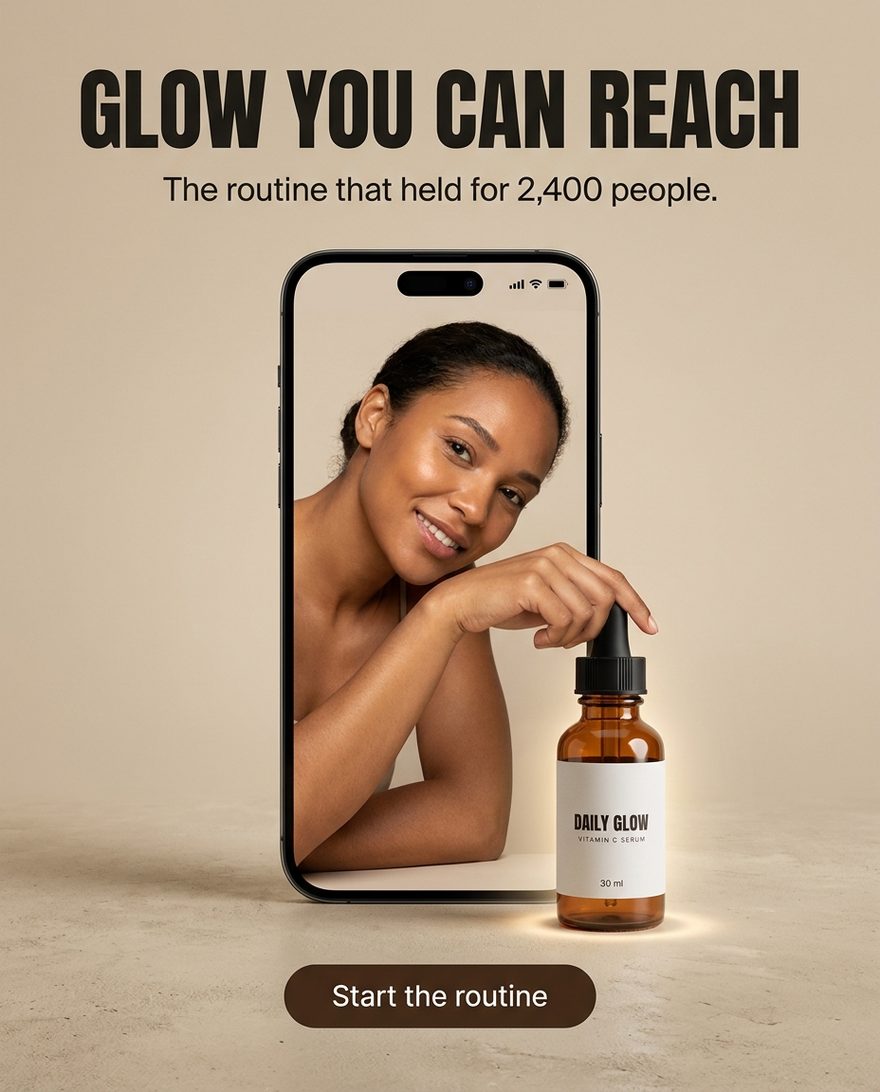
A hand reaching out of a phone screen holding the DAILY GLOW bottle, headline “Glow you can reach.” over a Start the routine button

Generated from the winning formula · 3 of 9

Problem Statement×Product in Hand×Explicit CTA

Module 04

Ask Galvor

Ask in plain English. It answers from your evidence and hands back the work.

  • Brand memory
  • Your data
  • Industry data
  • Evidence-backed
  • Reviewed, not auto-run
Ask GalvorLive

Answered from your evidence · 3 sources

Make a Campaign Brief to target Aspirational Users

Brand memory Aspirational buyers respond to your problem-statement hook and product-in-hand shots — the pattern behind your 7 strongest creatives.

Your question Brief targets Aspirational Users: lead with status and self-image, not price.

Industry data Competitors reaching this segment lean on before/after narratives and founder-led explainers — both gaps in your current library.

get_brand_dnaquery_metricscompare_dimension
✳ THE INTELLIGENCE BEHIND YOUR BRAND

Everything you create.
A brand that remembers.

Your creatives, briefs and feedback, connected. So every next ad starts with what your brand has already learned.

01 / WHAT GOES INYOUR BRAND SIGNALS
✳Brand MemoryBY GALVOR
Brand voiceVisual identityCreative learningsRecent trends
Connected context. Better direction.
02 / WHAT COMES NEXTSAME PRODUCT, TWO ADS
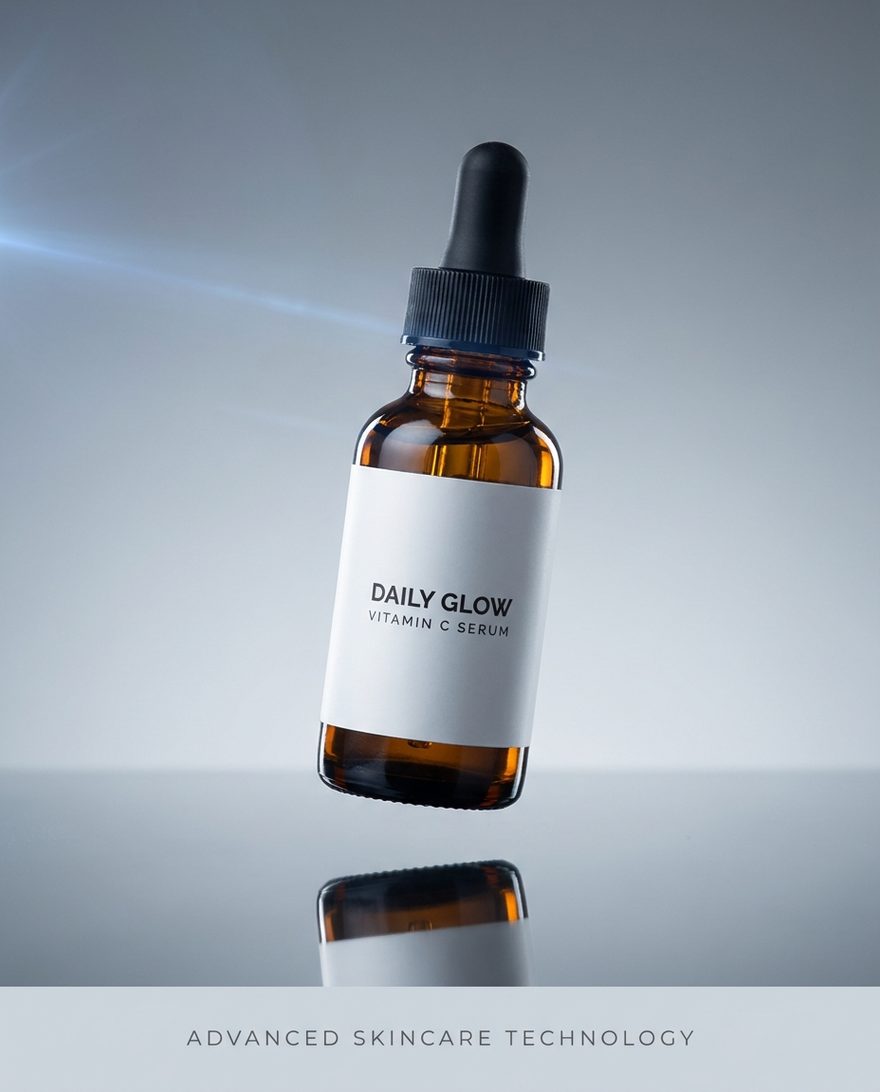
A generic studio packshot ad with no hook and no call to action - the version that did not work for this brand
The same product as a creator ad: a problem-statement headline, the bottle in hand and a Shop the serum button - the version Brand Memory pointed at
What’s winningTrending narrative in the last 30 daysMatches a pattern your Brand Memory already proved.
01Gather the signals
02Connect the context
03Create with memory
Illustrative experience · Sample brand

The Desk

You keep the brand.
We run the loop.

We price the attribute, not the ad.

Not more creative — the same loop, operated on your account every fortnight, with the evidence trail intact.

Cycle 14 · Sep 8 — Sep 22 Live
  1. problem-statementugc-testimonialat-home everyday-creator

    01 Decode

    31 ads read

  2. hook · problem-statement−18%cost per order

    02 Prove

    Every attribute priced

  3. 0:00 problem0:03 product in hand0:24 CTA

    03 Scripts

    9 written, timecoded

  4. Cut 070:31

    04 Cuts

    9 made, on brand

  5. Shipped · with your yes

    05 Shipped

    2 live this cycle

Day 1Nothing ships without a reason attachedDay 14

02 / Who does what

Your team stays in the seat that matters.

Galvor operates

We run the loop.

  • Decoding and attribute pricing
  • Competitor reads
  • Scripts and first cuts
  • The fortnightly recommendation

Every 14 days, on your account

You decide

You hold the yes.

  • Final approval on everything that ships
  • Brand voice and guardrails
  • Media buying
  • The customer relationship

Nothing goes live without your sign-off

The brief is the one thing neither of us does alone — your context, our evidence. Your agency stays if you want it: hand them the scripts and the evidence, and they shoot.

Why it holds

Does the score change because we made it?

No.

Same 50+ attributes. Same thresholds. Published method. Hand any brief to your own team or your agency and the decode reads it identically.

We’d rather be right than be hired.

  • We never touch the media budget.

    It stays with you, and that is exactly what makes the recommendation worth trusting.

  • Buy the product without the people.

    Galvor stays sellable as software on its own — the service is the part you can take or leave.

The co-worker

Meet Vira.

A digital co-worker on your creative team — and it shows its thinking.

Proof

Don’t take our word for it.

How brands that live on paid creative use Galvor — in their own words, with their own numbers.

Galvor vs. the alternatives

Galvor is a good fit if you need…

All four alternatives, one table.

Capability Galvor Gen tools Reporting tools Creator platforms Agencies
Decode reads
Why a creative worked Yes No Tags, not priced No Opinion
Each attribute priced to CPO & CAC Yes No Impressions only No No
Yours and the category, one view Yes No Your account only No Ad-hoc
Brand Memory keeps
Findings re-tested before trusted Yes No Campaign level No No
Sharper every campaign Yes No No No Leaves with the team
Create does
Does the work, shows the evidence Yes Generates blind Evidence, no action No No trail
Creator discovery, vetting, video QC Yes No No Yes Yes
Proved cuts in regional languages Yes A few languages No No Re-shoot
Run does
The loop operated, not advised Yes No No No Yes, no trail
Every shipped asset traced to a number Yes No Reports only No Rarely
Your team keeps brand and approval Yes n/a n/a No Varies

A bad fit if you need volume. Fifty assets by Friday? A generation tool wins. Galvor is for teams who must explain the spend — and if you would rather not run it yourself, we run it for you.

Talk to founders

Security & data

Your data stays yours.

What we read, where it lives, and who can see it.

Access
  • Read-only on your ad accounts
  • Never edits a campaign or moves budget
  • Every action waits for a person
Isolation
  • One workspace per brand
  • Brand Memory never pooled across brands
  • Only logins you approve
Protection
  • Hosted on Google Cloud
  • Encrypted in transit and at rest
  • Keys in a secrets vault, never in code
Control
  • Named Galvor staff only
  • Delete on request
  • Unused data deleted or anonymised

Full detail in our privacy policy.

Questions

The things people ask
before they ask about price.

Does the score change because we made the ad?
No. The same 50+ attributes, the same thresholds and a published method. Hand any brief to your own team or your agency and the decode reads it identically. We would rather be right than be hired.
What does Galvor actually measure?
It prices the attribute, not the ad. Every creative is tagged across 50+ attributes — hook type, format, who is on camera, where it was shot, whether the product appears early — and each attribute is priced to cost per order. Most tools tag creative and sort by return on ad spend at the ad level, which tells you which ad won but not why.
Do you take over our ad account?
No. Media buying stays with you. That is deliberate: leaving the budget where it is, is what makes the recommendation worth trusting. Most agencies want the media budget because that is where their margin sits.
Can we buy the software without the service?
Yes. Galvor is sellable as software on its own, and the managed service is the part you can take or leave. If you already have an in-house creative analyst, the product works without us operating it.
Does our agency have to go?
No. Your agency stays if you want it — we hand over the scripts and the evidence, and they shoot. Nothing goes live without your sign-off either way.
How long is a cycle?
Fourteen days. Decode, Prove and Create run on your account every fortnight: every new creative tagged, each attribute priced, scripts written from what held, first cuts made, and a call on what to scale, cut or shift — each with the number behind it.
What do we need in place to start?
Enough creative volume for the maths to work. Roughly $50,000 a month in paid social and 20 or more creatives shipped a month. Below that, a brand runs fewer than one winning ad a month on average, so there is no pattern to find — only 5–8% of ads become winners. It is a statistics problem, not a budget one.
Is Galvor a good fit for every brand?
No — it is a bad fit if you need volume. Fifty assets by Friday is a job for a generation tool. Galvor is for teams who have to explain the spend.

Get a free analysis of your ads and social posts.

  1. What's working in your current ads, and what isn't.
  2. Your strongest creative pattern, and the budget missing it.
  3. Where your competitors are pulling ahead.

What do you want to get out of it?