Decoded by Galvor · Issue #3
Creative Diversity: Low. Why 30 New Ads Won’t Fix It
Meta rebuilt the three systems that decide which ad a person sees. They now read who an ad is for, not only how it looks. Here is how each one works, what Galvor saw in the data, and what to change.
By Raj Dhakad, Founding AI Engineer, Galvor AI · Updated
Key takeaways
- Meta rebuilt three systems. Andromeda picks which ads a person could see, GEM learns what each shopper wants, and GenRecs reads new ads and products so they start from what similar ones already learned. Each is explained at the bottom.
- Thirty ads that only change the backdrop still speak to one buyer with one reason, so Meta treats them as close to one ad. In the last six months of ads Galvor analysed, new ads that looked like many running ads got 36% less first-month spend.
- What you control now is the input: ads with a clear buyer, moment and reason to buy, and a product catalogue with rich titles and descriptions.
Monday, 9:40 a.m.
Sam, our growth lead from Issue #2, opens Ads Manager. A new column called Creative diversity says Low next to the ad set that pays the bills. Sam asks the agency for thirty new ads by Friday.
The agency takes the brief literally: new backdrops, new colours, a static, a carousel, an unboxing. Thirty ads that look nothing alike. Two weeks later, the old ad still takes the budget.
Every one of the thirty spoke to the same buyer, at the same moment, with the same reason to buy. They looked different. To Meta’s new process, they were similar.
Thirty new looks. One buyer, one reason.
Meta rebuilt three layers in October
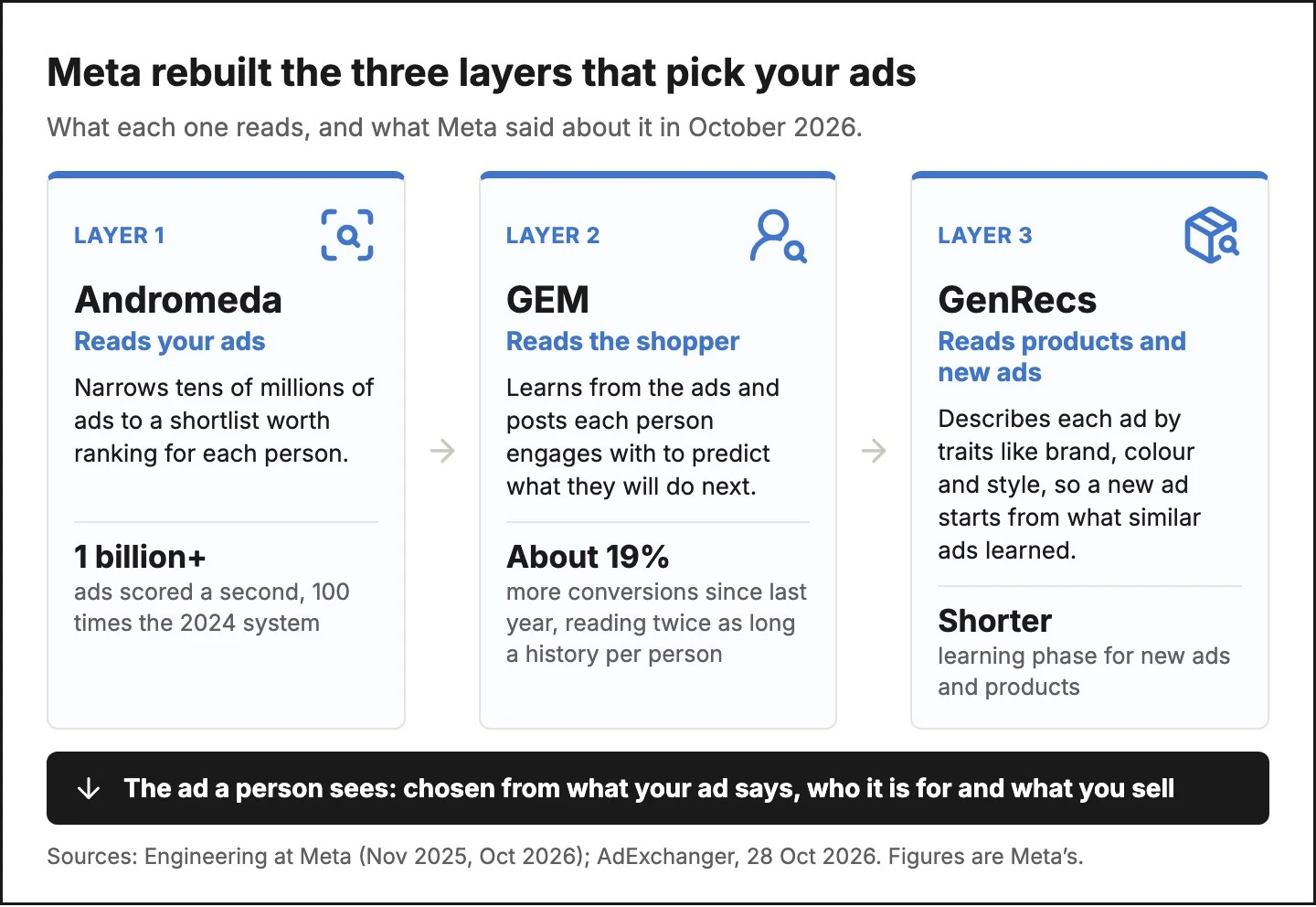
1 Andromeda reads your ads
- What it is: the shortlist. It picks the few thousand ads worth ranking for each person, out of tens of millions. Miss the shortlist and your ad never reaches the auction.
- What Meta says: it now scores every eligible ad, over a billion a second, 100 times the 2024 system, and has added 2.4% more conversions on Facebook since 2025.
- What it means for you: a new ad has a better chance of being considered early, but only if it looks and reads like a new ad.
2 GEM reads the shopper
- What it is: what Meta calls the “central brain” of its ad ranking. It learns from the ads and posts each person engages with, to predict what they will do next.
- What Meta says: it now reads twice as long a history per person, and has added about 19% more conversions since last year.
- What it means for you: you target through the creative. One shopper can care about time, proof and price at once, so Meta may show them several of your angles in a row.
3 GenRecs reads products and new ads
- What it is: a language model that describes every ad and product by traits such as brand, colour, fit and style, so a new ad starts from what similar ads already learned.
- What Meta says: it shortens the learning phase for new ads, though it doesn’t remove it.
- What it means for you: words count, not just pictures. Captions, scripts, on-screen text and your product catalogue (the titles and descriptions your store sends Meta) all tell it who you sell to.
The one part you can see
The Creative diversity column started appearing in late August and reached most accounts in the last week of October. It labels each ad set high, medium or low:
“Creative diversity is calculated by comparing the images and video thumbnails in your ad set to each other to determine similarity.”
Meta Ads Manager help text. Meta calls the metric estimated and in development.
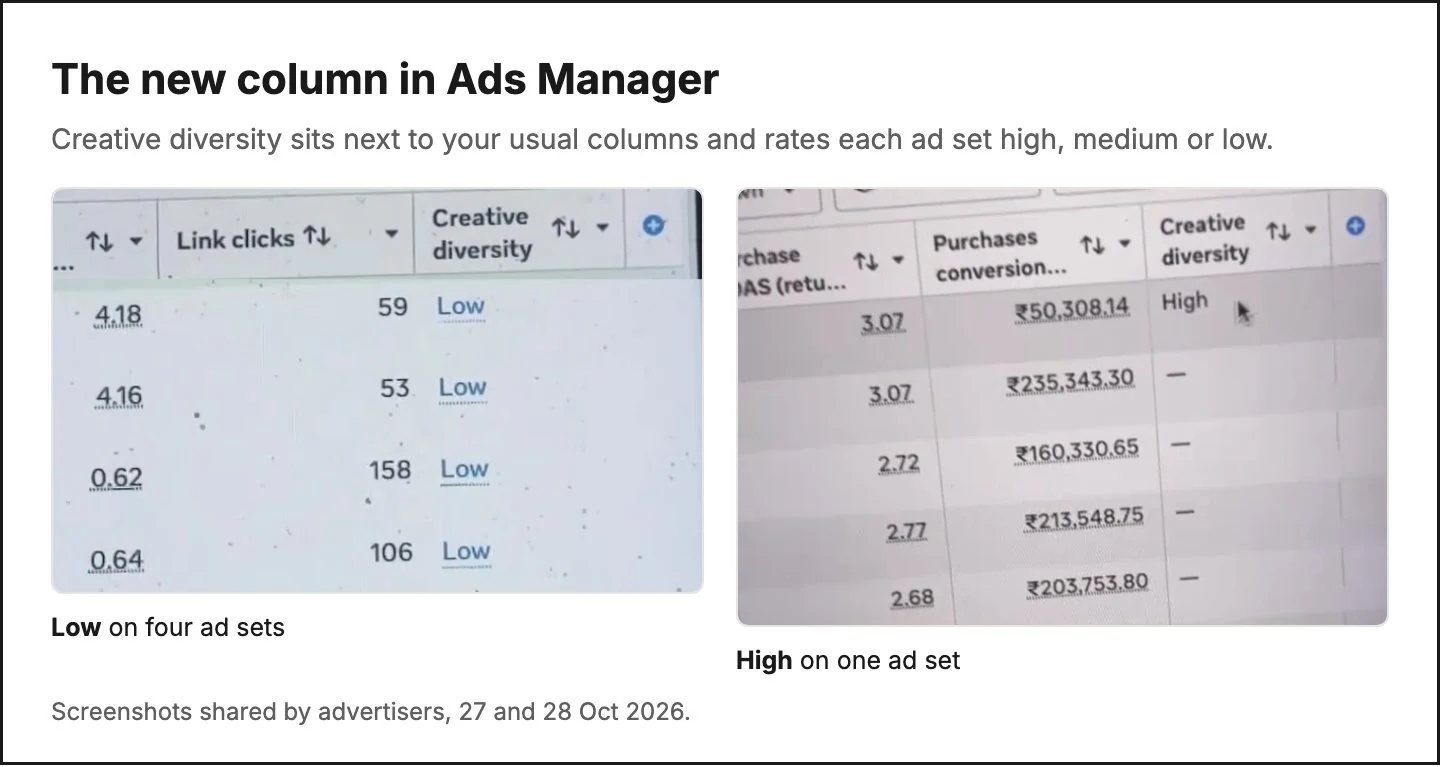
The column only compares pictures. The three layers behind it read far more: your words, your buyer and your product. If the column rates an ad set Low, treat that as a smoke alarm, not a verdict.
What Galvor saw in the data
Across the brands we work with, we keep seeing the same pattern. Here is how it looked in the last six months of ads Galvor analysed: every new video ad launched from May to September 2026, and how much of the budget it got in its first month.
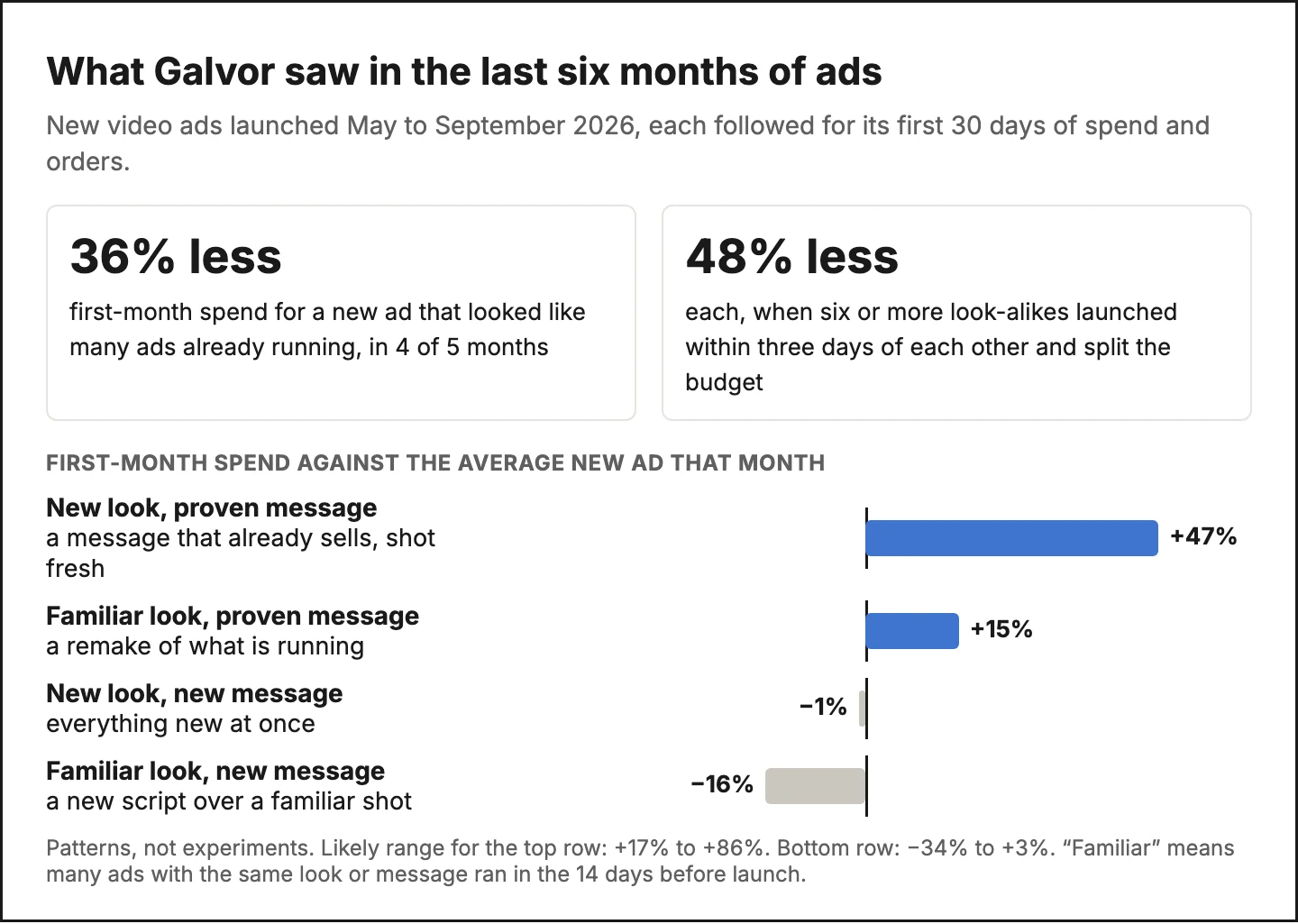
The bottom row is the one to remember. A new message over a familiar shot got 16% less: the script changed, but the ad still looked like one already running. A proven message in a new look did best, with 47% more. A new reason needs a new first shot.
How to think about diversity: Galvor’s five layers
“Creative is the new targeting.” “Your job is to give Meta enough creative diversity to match the right message to the right person at the right time.”
Lines media buyers have repeated over two years of Andromeda.
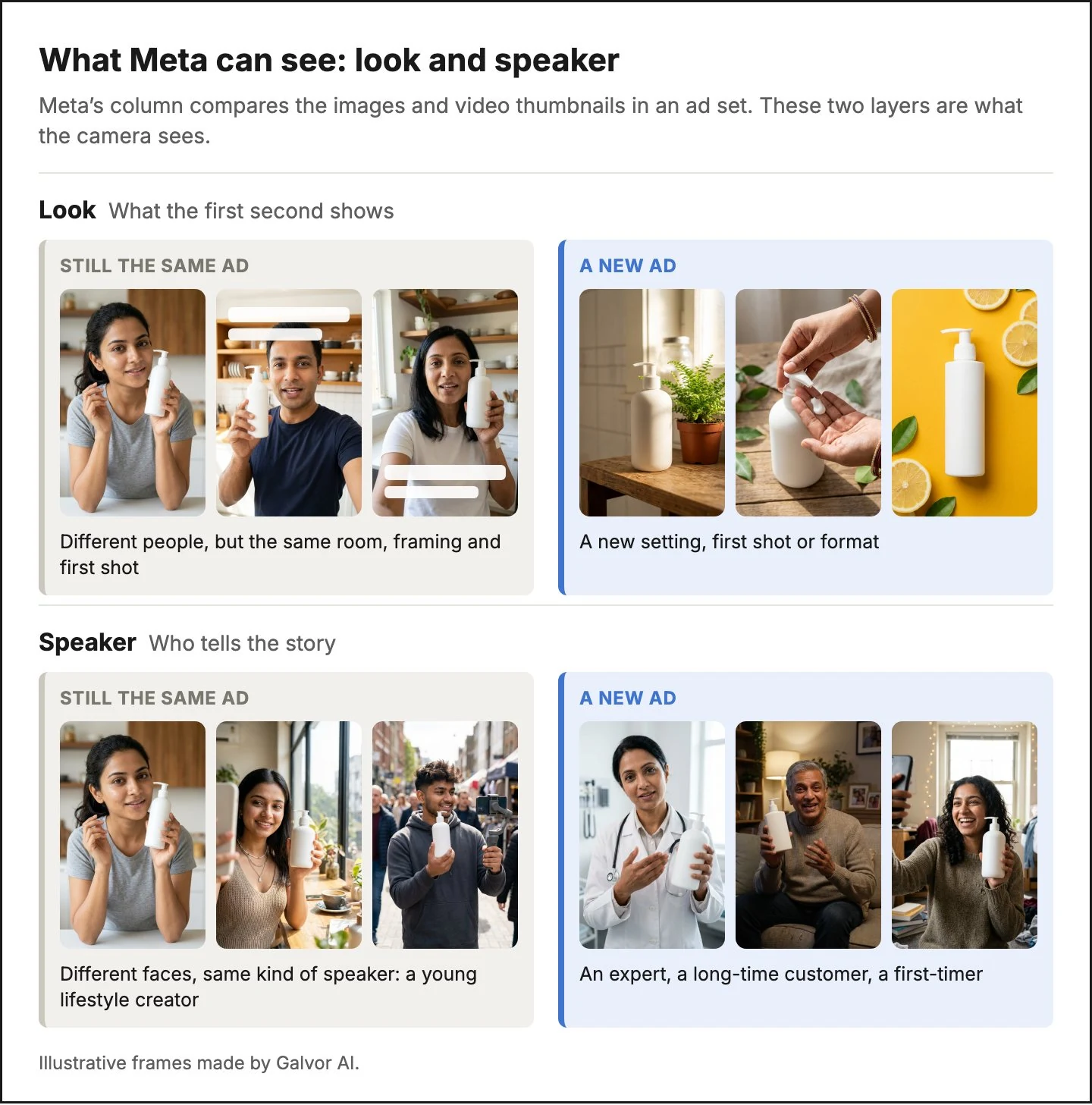
If the system reads ads, shoppers and products, a new ad has to be new in more than its look. Galvor scores every ad on five layers. Two are what the camera sees. Three are who the ad is for and what it says.
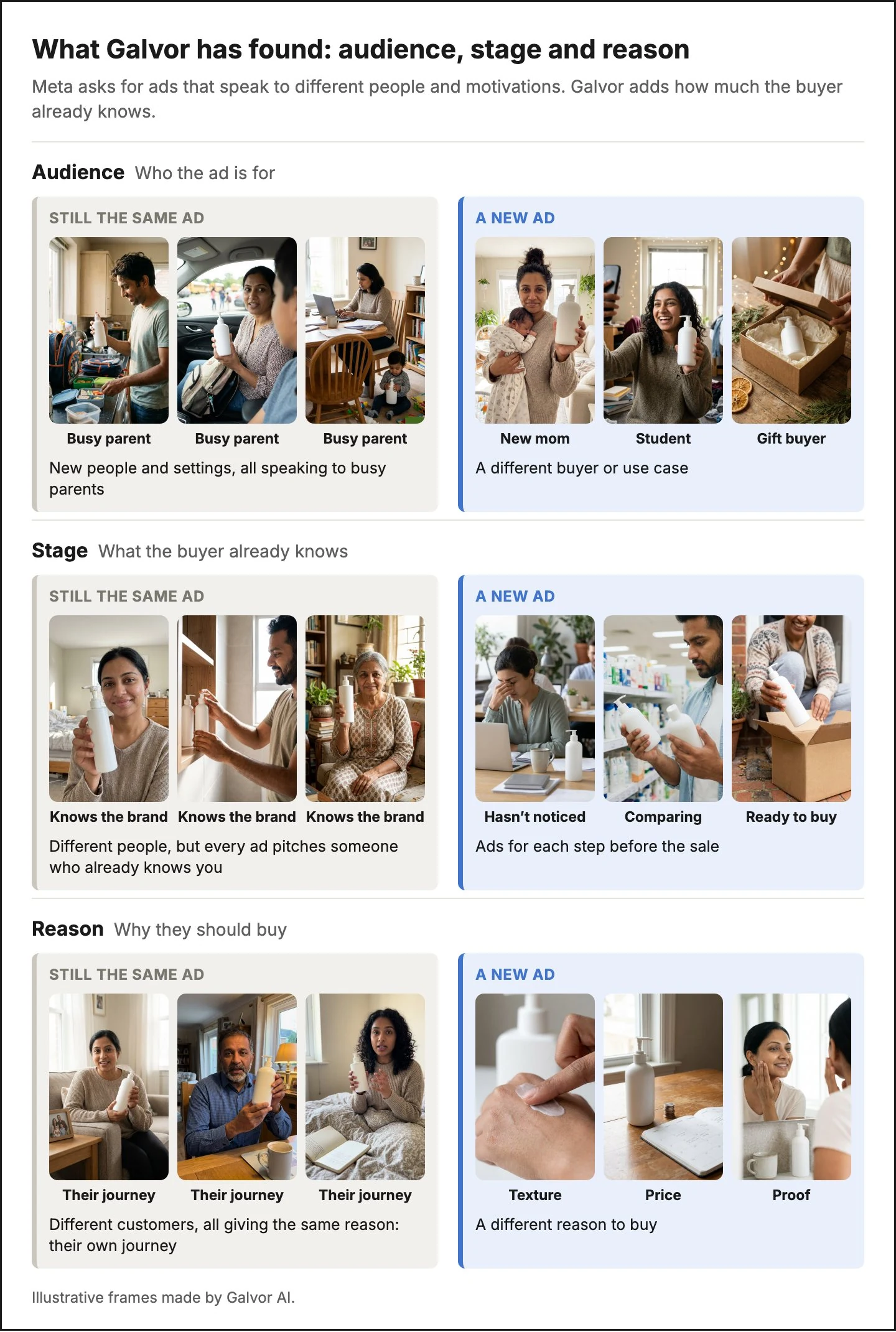
The shift for marketers and leaders
Five moves Galvor recommends.
1 Write for a reader, not only a viewer
Meta’s new ranking models and GenRecs read captions, scripts and on-screen text. Say who the product is for and what it fixes, in plain words. Fill in your product catalogue too: rich titles and descriptions help Meta match you today, and they are what shopping agents will read tomorrow.
2 Fund new buyers, not new versions
Meta’s own example of iteration is the same visuals with a new call to action, and it says iteration “should not replace true creative diversification”. In Galvor’s data, six or more look-alikes launched within three days each got 48% less first-month spend. Thirty edits of one shoot buy one ad.
3 Give new ads time, and treat a Low diversity rating as a smoke alarm
Galvor has seen some ad styles start about 35% dearer per order in their first two months and end close to average over their life. Judge new ads after weeks, not days, and use a test campaign to give ideas you believe in a fair share of spend. Meta’s Creative diversity column is still in development, and ad sets it rates Low have kept selling. Find out what is alike before you switch anything off.
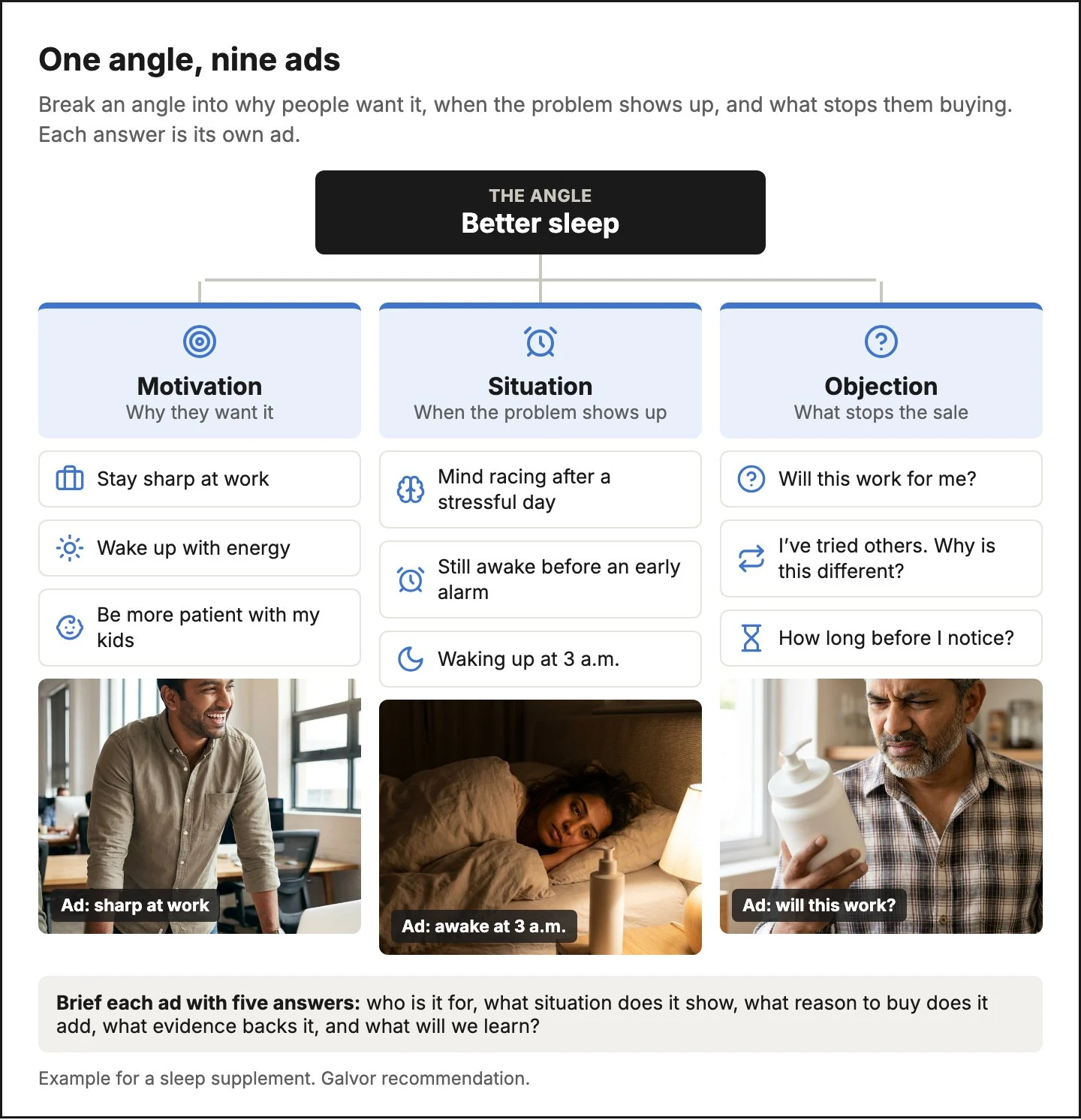
4 Split every angle into motivation, situation and objection
A broad angle like “better sleep” is a family of ads, not one ad. Each motivation, situation and objection gives Meta a separate reason to match a different person.
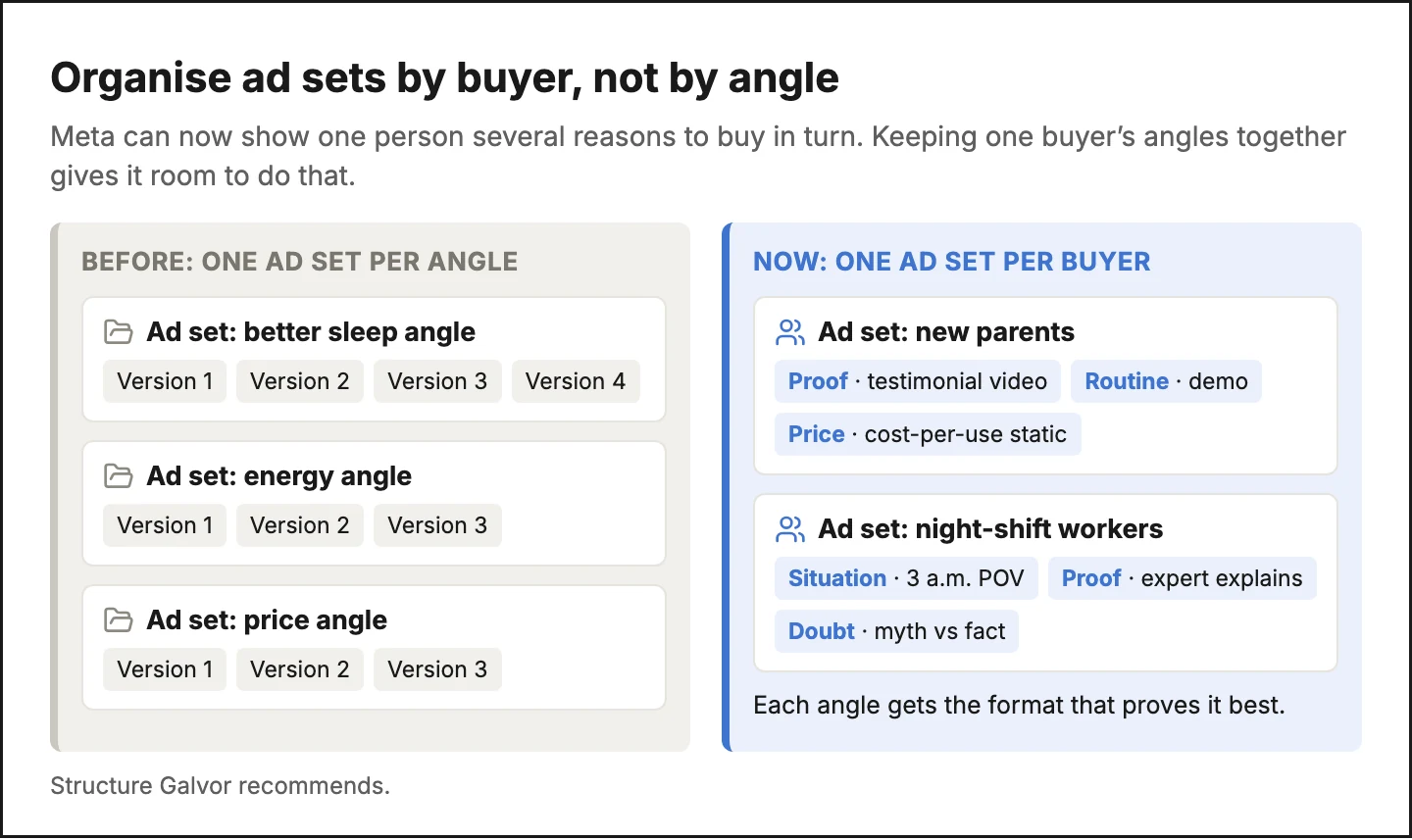
5 Organise ad sets by buyer, not by angle
One shopper can care about saving time, proof and price at once, and Meta can now show them several angles in turn. One ad set per buyer, with each angle in the format that proves it best, gives it room to do that.
Next issue: Beyond Narratives and Categories: How Galvor Uncovers the Psychology Driving Your Brand
Narratives and categories tell you what an ad is about. They don’t tell you why it works. Next time, we show how Galvor decodes the buyer psychology behind a brand’s best ads, and builds hooks, scripts and campaigns on it.
The three systems, explained
Andromeda. Meta’s retrieval system. For every person and every ad slot, it narrows tens of millions of ads to a shortlist of a few thousand worth ranking. An ad that misses the shortlist never reaches the auction. Meta’s post, 28 Oct 2026
GEM. Meta’s Generative Ads Model, which Meta calls the central brain of its ad ranking. It learns from what people do across Facebook and Instagram, in ads and in posts, and trains the models that rank ads. It doesn’t pick ads itself. Meta’s post, 10 Nov 2025
GenRecs. Meta’s generative recommendations work. It uses language models to describe every ad and product with a shared set of building blocks, which Meta calls semantic tokens, so a brand-new ad can borrow what Meta has learned about similar ones. Meta’s post, 19 Oct 2026
How we did this
Within ten days in October, Meta published two engineering posts (19 Oct, 28 Oct) and briefed the trade press on a third change (AdExchanger). The figures for each layer are Meta’s own.
Galvor’s data: new video ads launched from May to September 2026 by brands we work with, each followed for its first 30 days of spend and orders. We grouped ads by how they look and what they say, and compared each new ad’s first-month spend with the average new ad of its month. These are patterns, not experiments, and no brand is named. The cost-per-order point in move 3 looks at each ad’s whole life.
The five layers and the five moves are Galvor’s recommendations, drawn from our work with brands and from the sources below. Nobody outside Meta has measured the October changes yet.
Sources
- Engineering at Meta (19 Oct 2026), GenRecs tokenization; (28 Oct 2026) Meta Andromeda: next-generation ads retrieval; (10 Nov 2025) GEM, the central brain of ads recommendation
- AdExchanger (28 Oct 2026), Meta has a new ad ranking system built on LLMs, plus upgrades to Andromeda and GEM
- Meta Ads Manager help text, About creative diversity
- Meta for Business (16 Dec 2025), Demystifying creative diversification
- YouTube, Meta Rebuilt Its Ad System, Again (Andromeda, GEM and GenRecs), and an agency walkthrough of Andromeda 2.0, both October 2026
- Dara Denney, The 5 levels of creative diversity (YouTube, 18 Dec 2025)
- Galvor review of 134 Instagram reels by media buyers and agencies about Andromeda and the Creative diversity column, October 2025 to October 2026
- Previously in Decoded: Issue #2, False Bangers: Why Your Best Hook Isn’t Always Your Best Ad